Hoback the Moose, Big Horn Sheep, Trumpeter Swans and a Vintage Bronco
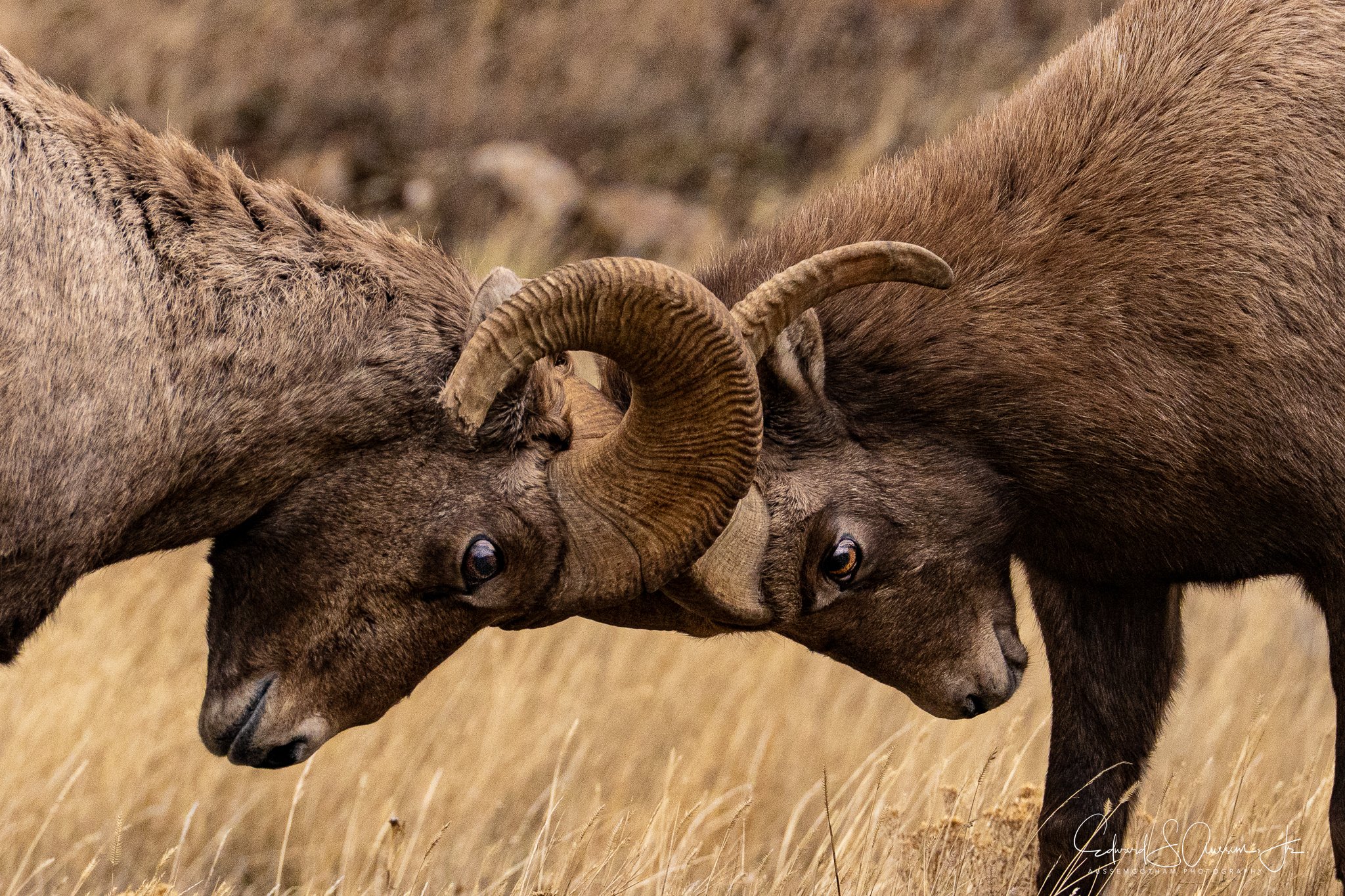
Rams Assertion of Dominance
A Jackson Hole Wildlife Photography Adventure, December 8-12, 2025
I traveled to Jackson Hole for my first wildlife photography workshop in December 2025, unsure of what to expect. What I discovered exceeded all expectations—a perfect blend of planned wildlife encounters and unexpected photographic opportunities.
Unexpected Encounters in Downtown Jackson
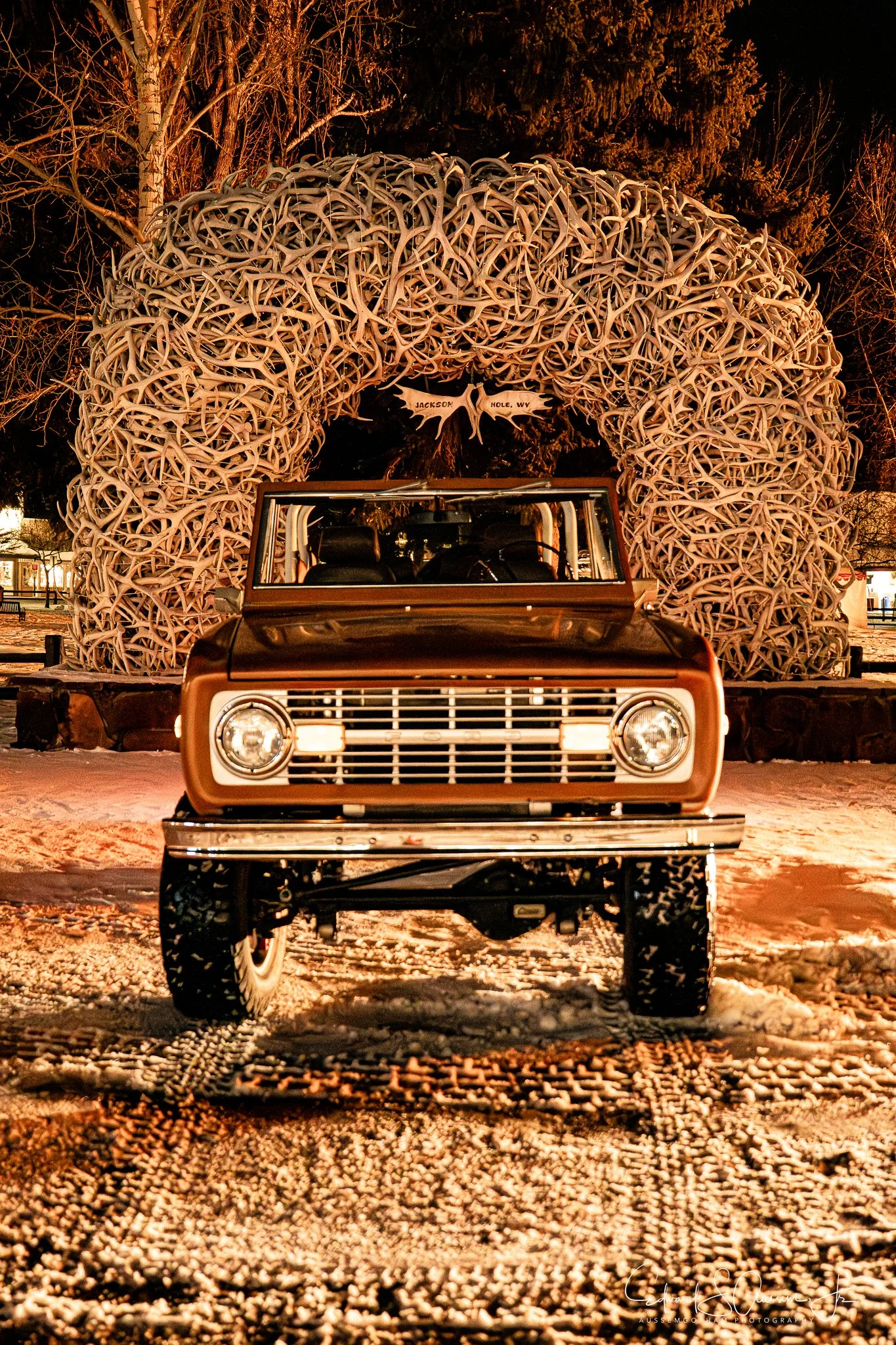
Bronco and Antlers-Downtown Jackson, Wy.
On my first morning at 6:00 AM, I stumbled upon a photo shoot featuring a red vintage Volkswagen bus and three young women posed in front of the Million Dollar Cowboy Bar. This serendipitous discovery came after encountering a tall gentleman in a cowboy hat driving a 1969 Ford Bronco—top off in 20-degree weather. He invited me to photograph his vintage vehicle after backing it beneath one of Jackson Hole's iconic antler arches, and tipped me off about the upcoming shoot at the Cowboy Bar.
Despite frequent rain throughout the trip, I captured beautiful sunrise photos and decent sunsets, though the surrounding mountains and buildings limit the drama of evening light in downtown Jackson.
Finding Hoback: The Art of Moose Photography
The highlight of the trip was photographing moose, but first you have to find them. Unless you have an excellent guide who knows the right spots and timing, these majestic creatures remain elusive. Our guide led us to seven moose grazing on our first morning.
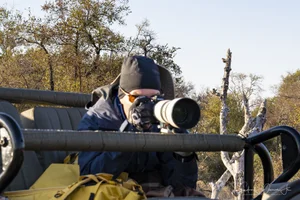
Photographing moose requires commitment. After parking, we hiked into their grazing area with cameras equipped with long lenses for close-ups. The terrain challenged us with sagebrush, low branches, roots, and snow to navigate. Once there, we maintained the required 25-yard minimum distance while constantly repositioning as the moose moved in search of food.
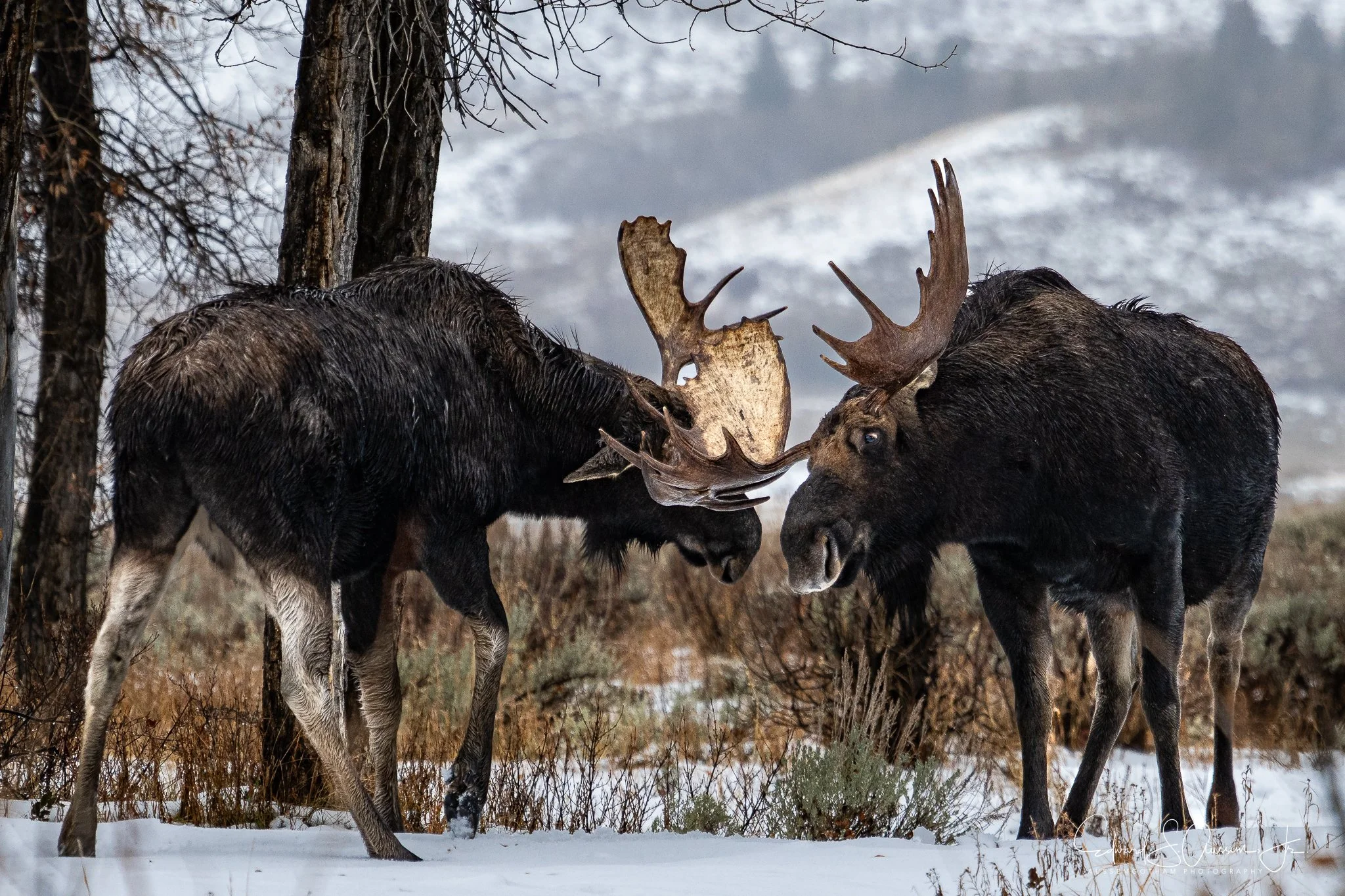
Moose-Ready to Play
The best shots come from positioning yourself ahead of the moose and waiting for them to lift their heads. Background matters enormously—mountains are ideal, while cars and people detract. With numerous photographers vying for great shots, awareness and courtesy are essential to avoid blocking others' views.
These enormous animals sport unique, photogenic antlers called "paddles." After grazing for hours, they settle down to rest. In this sitting position, photographing just their paddles rising above the sagebrush creates an attractive and unusual composition, especially with favorable light and background.
The morning we photographed Hoback and his companions, we captured numerous excellent images despite overcast, occasionally rainy conditions and crowded shooting locations. The soft, diffused light proved beneficial, even without direct sun highlighting the moose's paddles.
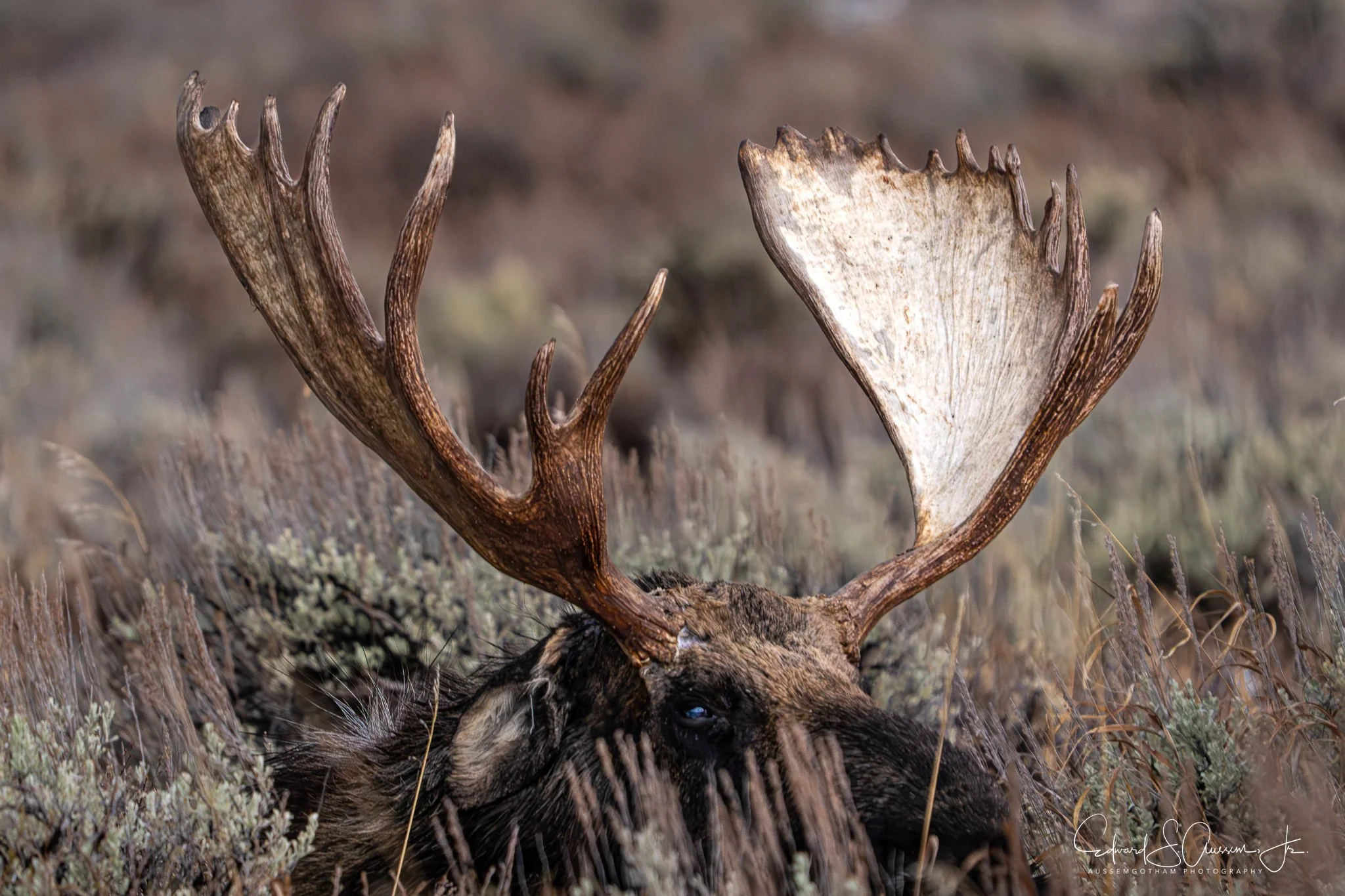
Paddles at Rest
We later learned through a Facebook post that one of Hoback's paddles fell off that very afternoon, with the second dropping the following day. This annual shedding is natural—the antlers regenerate within a year—but our timing couldn't have been more fortunate.
Another day brought a different challenge: hiking nearly a mile to photograph three moose—two bulls and one cow. These animals moved more quickly than the previous group, requiring us to hustle to maintain our safe distance. We even witnessed them locking horns, a rare behavioral moment.
Big Horn Sheep: Speed and Power
Photographing big horn sheep—rams, ewes, and lambs—required long lenses but, thankfully, no sagebrush hiking. We positioned ourselves roadside in a different section of Grand Teton National Park, battling high winds that made sharp images challenging.
Big horn sheep love chasing each other. The rams, ewes, and lambs alternate between stillness and explosive bursts of speed, racing in groups of three, four, five, or more across the fields. Capturing them in motion is difficult but deeply satisfying when successful.
Watching rams charge and slam their horns together is unforgettable. The impact produces a loud cracking sound like a shotgun blast. This ritual establishes dominance (along with age) and attracts ewes. It strikes me as an extreme courtship display, but then again, I lack the impressive horns necessary to assert dominance in their world.
Trumpeter Swans: Patience and Precision
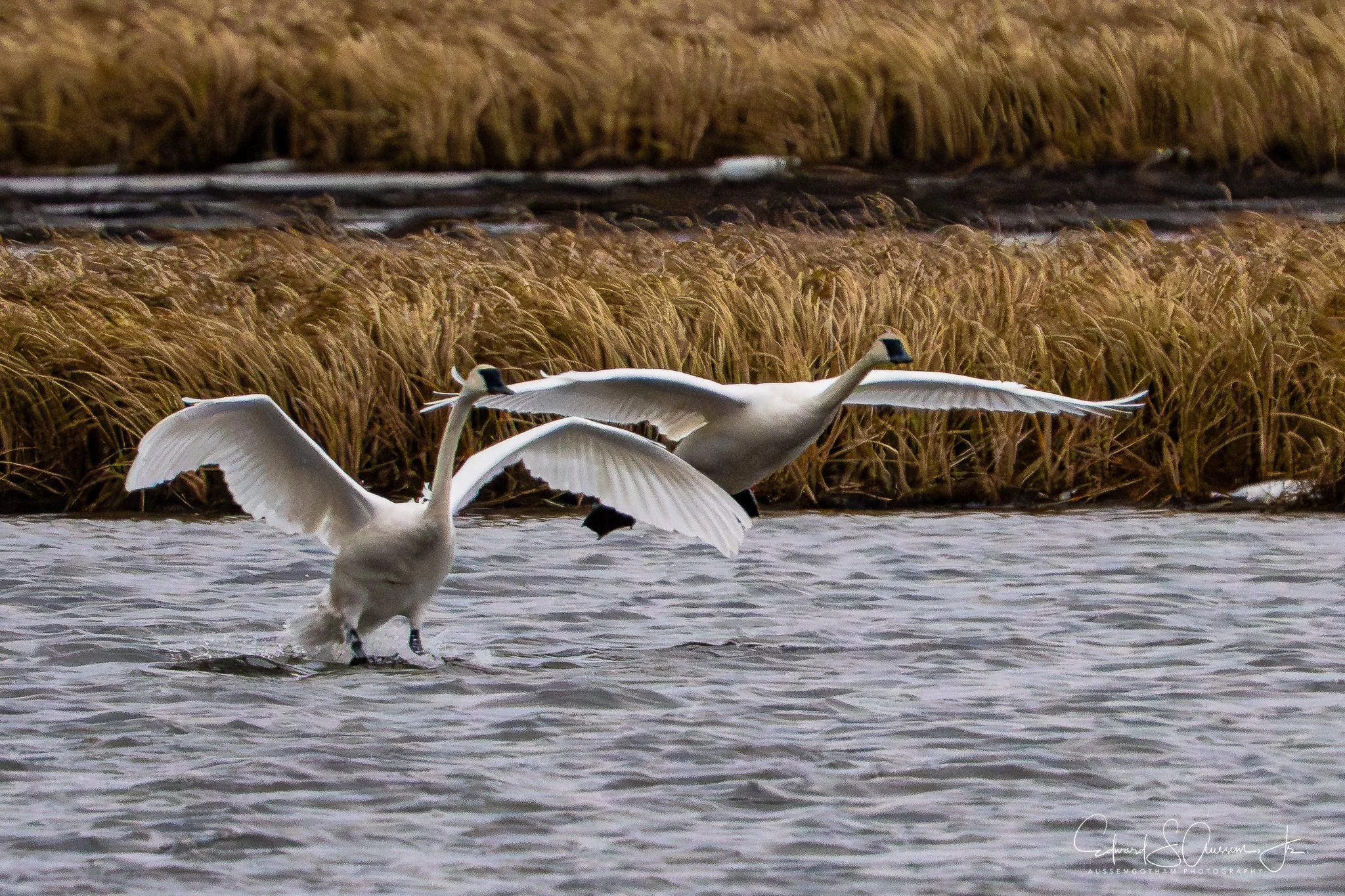
Cleared for Landing
We found numerous trumpeter swans on a pond, though capturing interesting poses proved challenging. I was fortunate to photograph them preening and a pair landing on the water. A tripod became essential for supporting the long, heavy lens during extended shooting sessions. We took many photographs, knowing only a select few would make the final cut.
Reflections
This trip was tremendously successful. While better weather would have been welcome, the experience remained enjoyable and productive. My first photography workshop delivered wildlife encounters I'll never forget, impromptu urban shoots that tested my adaptability, and the valuable lesson that sometimes the best moments in photography come from simply being in the right place at the right time—especially when that place is Jackson Hole in December.
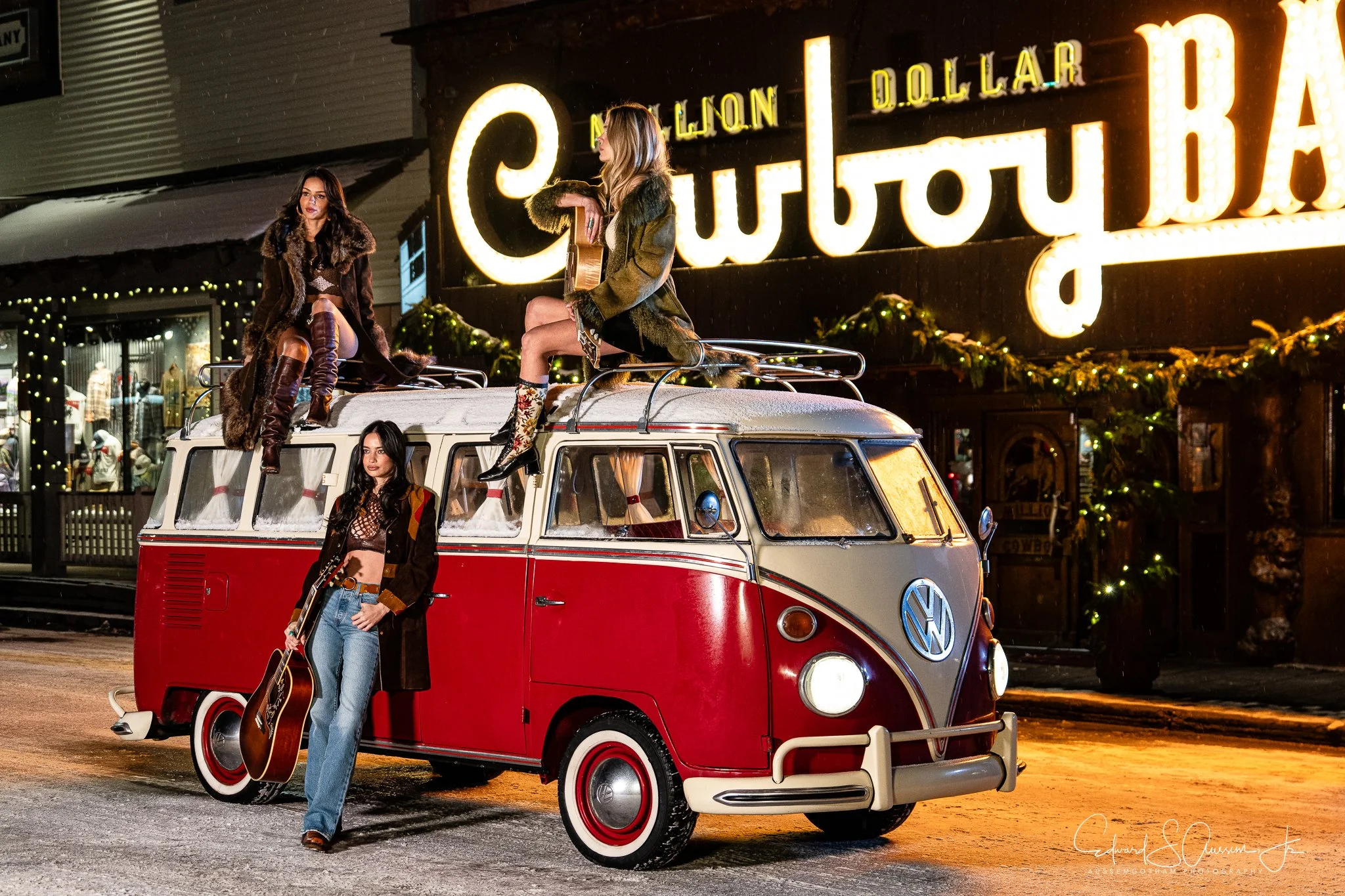
6:30AM Photo Shoot